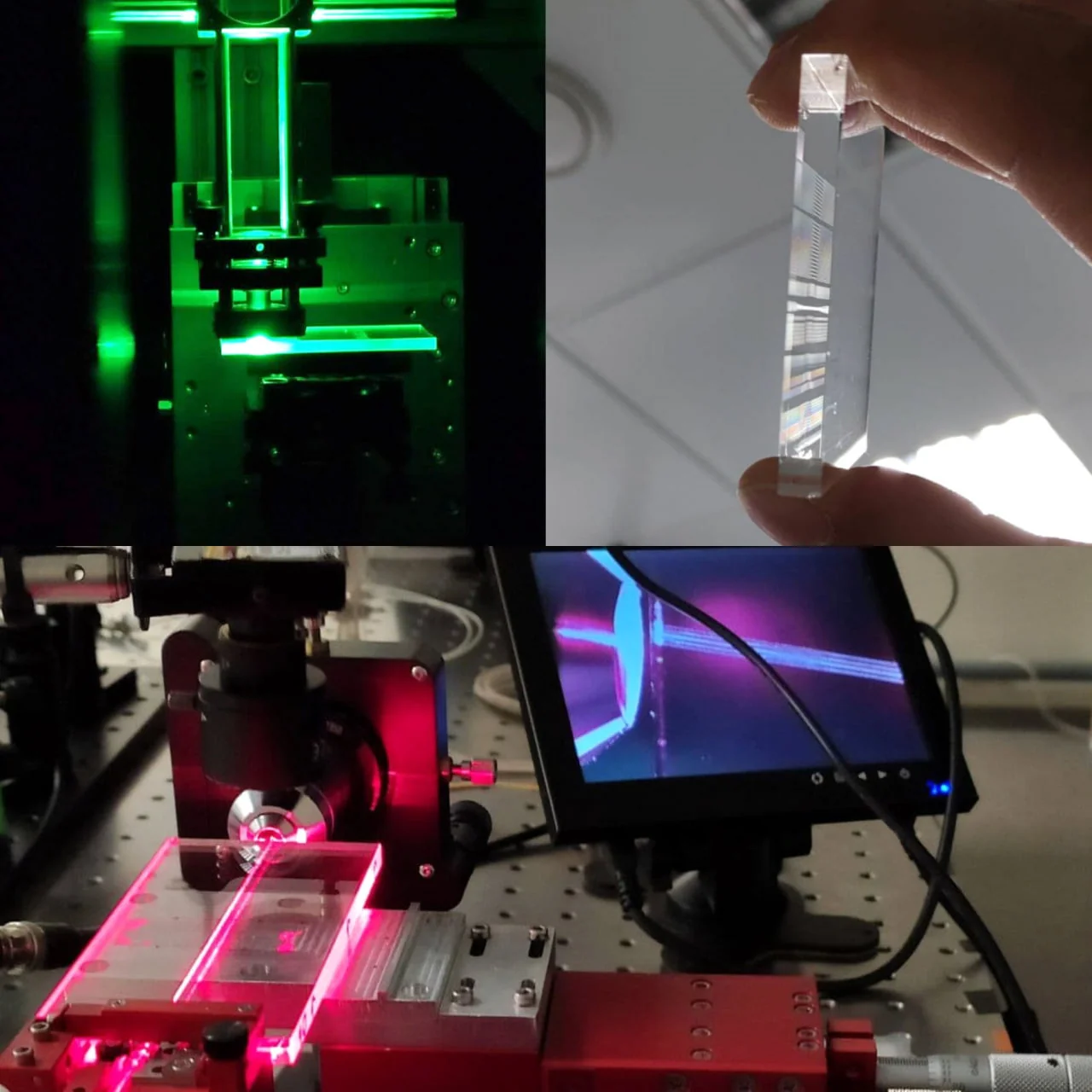
Our group is developing femtosecond laser writing technology for creating waveguides in various transparent dielectric materials. Exposing a sample by tightly focused femtosecond laser pulses results in a localized change in the refractive index. The increase in refractive index in the exposed area allows to create a waveguide by smoothly moving the sample along a specified trajectory. Femtosecond laser writing technology has a wide range of applications, from writing optical waveguides to micromachining of materials.
Key areas of research:
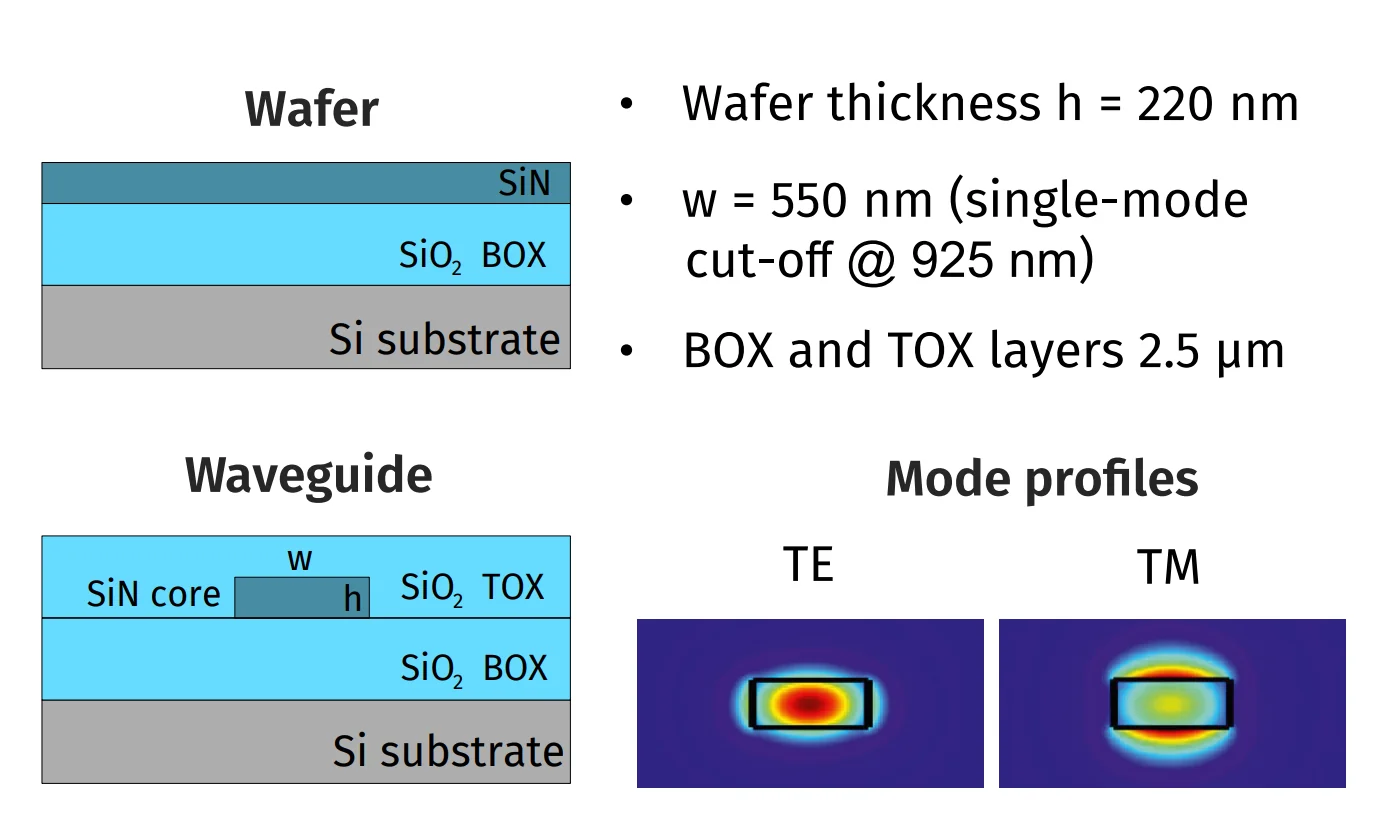
Beyond our laser writing technology, the laboratory is actively developing photonic integrated chips for planar mask technologies (lithography, etching, and deposition). The most interesting materials are silicon, silicon nitride, and lithium niobate.
Key areas of research:
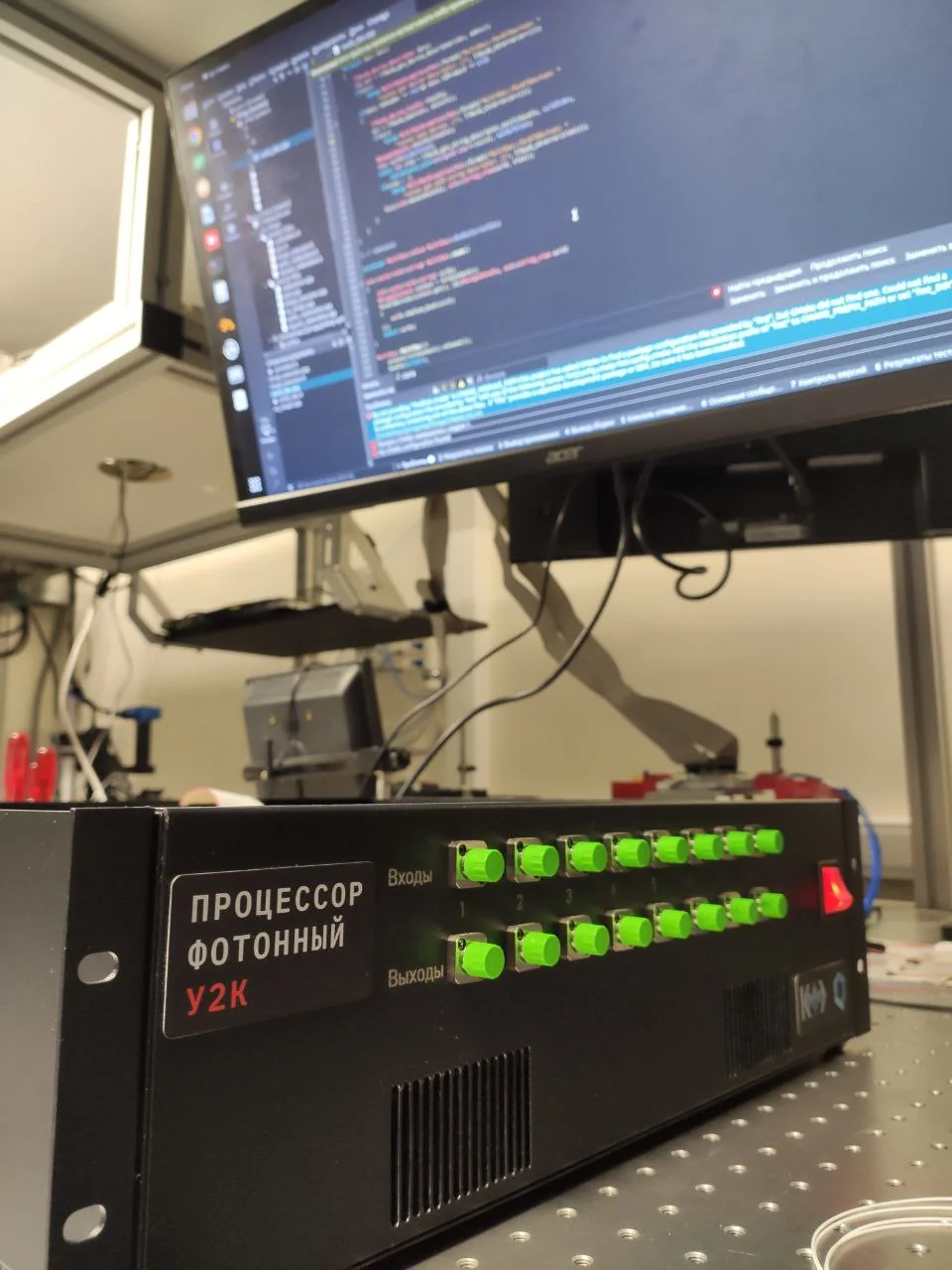
A multichannel programmable interferometer, or photonic processor, is capable of performing reconfigurable unitary transformations on optical modes — the input and output channels. The process of calibrating and programming optical interferometers is an important experimental task, which can prove quite challenging for optical chips with complex structures, as well as for large photonic chips with a large number of control elements. In our laboratory, we are successfully engaged in the experimental programming of various reconfigurable photonic processors manufactured using our femtosecond laser writing technology. By programming a reconfigurable optical processor, we mean constructing its full digital model, which can be used to predict the optical transformation of the photonic chip with specified values of control parameters — phase shifts that affect the transformation performed by the interferometer. When programming optical chips, we use various optimization methods, including those based on modern machine learning techniques. At the same time, the direct algorithms and methods for calibrating and programming photonic processors are a topic with many pressing challenges and questions for future solutions.
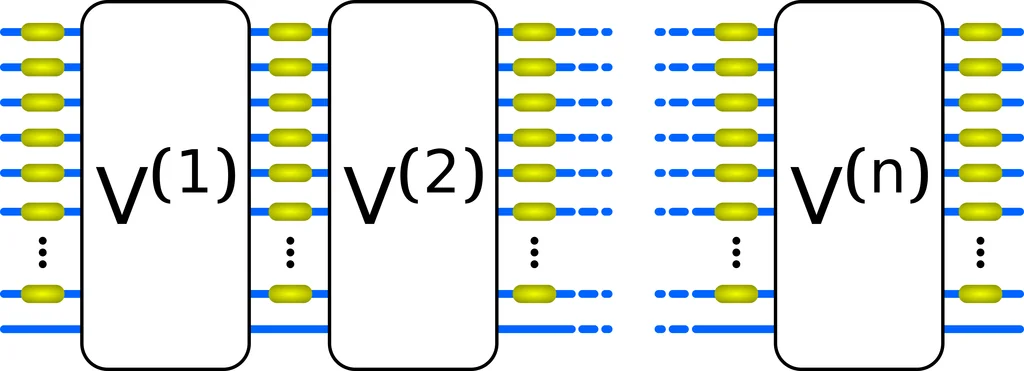
The group studies the theory of programmable photonic circuits (linear optics) for quantum and classical information processing, focusing on scalability, low circuit depth, and error resilience. We develop architectures and control/calibration methods for interferometers to implement specified transformations even with losses and process inaccuracies.
Key areas of research:
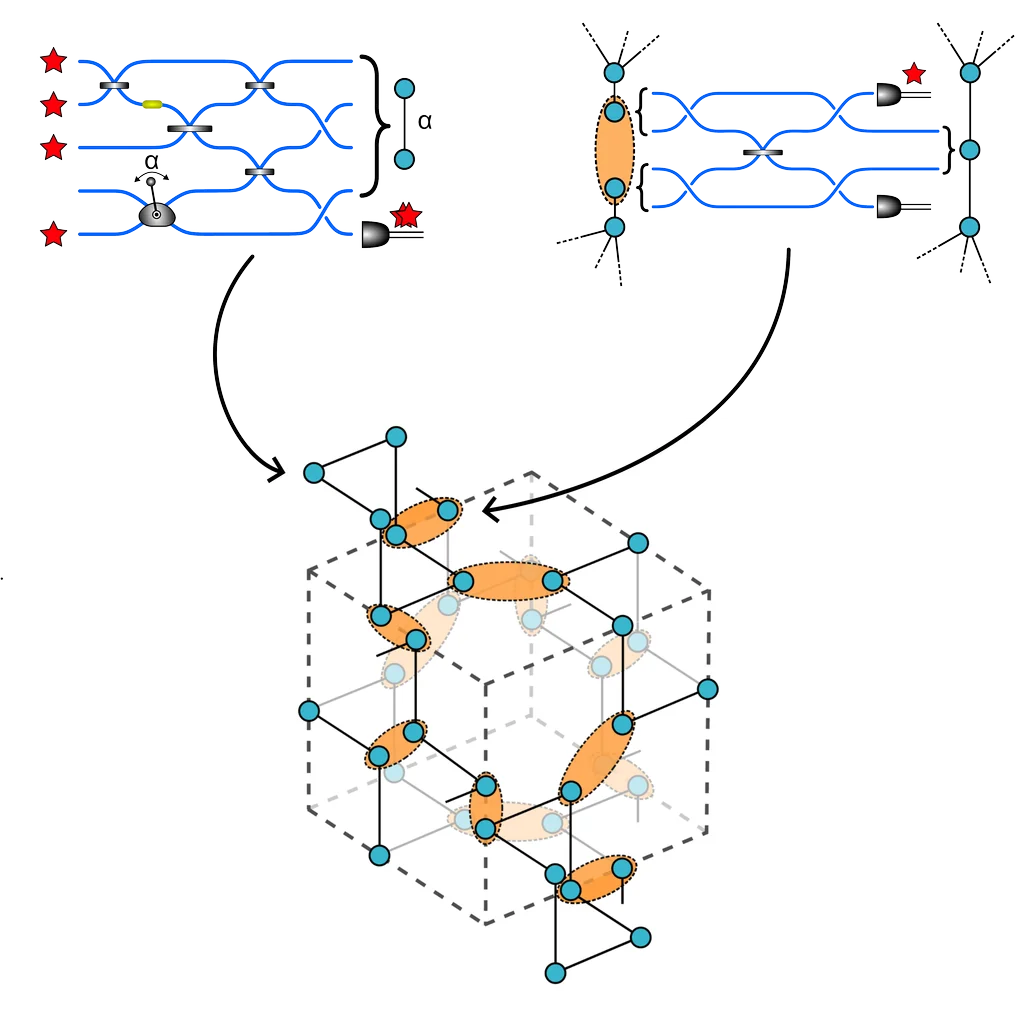
The group conducts theoretical research in the field of linear-optical quantum computing. We develop new protocols, architectures, and algorithms for linear-optical quantum computing, aimed at creating scalable and fault-tolerant photonic quantum technologies.
Key areas of research:
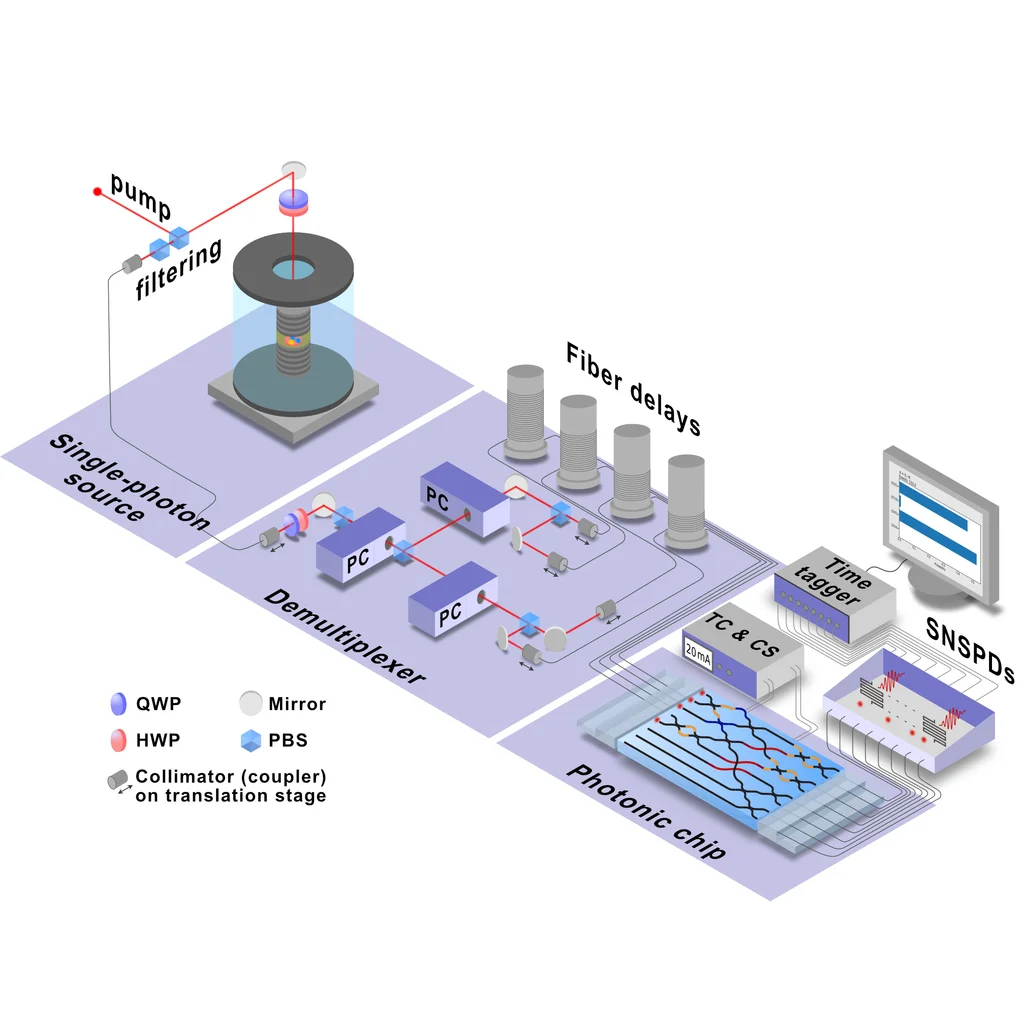
Experimental implementation of quantum computing on a photonic platform requires the development of highly efficient photon sources, programmable interferometers, and single-photon detectors. In our laboratory, we are developing a comprehensive approach covering all stages – from the generation of quantum states to the implementation of complex computational algorithms on photonic integrated chips.
Key areas of research: